Steele-Waseca Cooperative Electric

National Electrical Safety Month

May is National Electrical Safety Month, a time when SWCE would like to stress electrical safety and share some safety tips with our members.   Energy provided by electric utilities is an essential part of everyday lives.  That same power used to make life easier can be dangerous though.  Each year about 1,000 people die from electrical related accidents.  Remember to take caution around electricity.

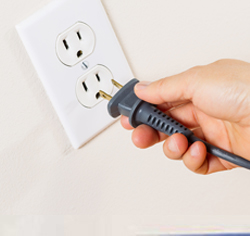
Over the last three decades, ground fault circuit interrupters (GFCI) have been installed where electrical products might come in contact with water (i.e. bathrooms, kitchens, and outdoors).  A GFCI is a special type of outlet designed to trip before a deadly electrical shock can occur.   It is a good idea to test your GFCI’s monthly and after every major electrical storm to ensure they are working properly.   Plug a nightlight into the GFCI and push the test button and the light should go off.  Push the reset button and the light should go back on.   If not, the GFCI could be damaged and should be replaced.

In the kitchen make sure cords around toasters, ovens, and ranges are away from the hot surface.   Cords can be damaged by excess heat.  Locate all appliances away from the sink. Electrical appliances can cause a shock if they come in contact with water.  


May is a good month to check all lamp and appliance extension cords.   Shock or fire can result from damaged cords or improper use.   Check that the cords are in good condition (not damaged or cracked.  Do not attempt to repair damaged cords yourself.   Check that your extension cords are properly rated for their intended use, indoor or outdoor.   Check that they meet or exceed the power needs of the appliance or tool being used.

Check wall outlets and light switches.   Are all outlets and switches cool to the touch?   Warm outlets or switches may indicate an unsafe wiring condition exits.   If you hear crackling, sizzling, or buzzing from your outlet call a licensed electrician to examine the cause.   Consider installing tamper-resistant receptacles to prevent small objects from being inserted into the outlet.

Check the wattage of all light bulbs.   Does the wattage of the bulb match the wattage indicated on the light fixture?   If the wattage of the bulb is greater than indicated on the fixture it can overheat and lead to a fire.  When changing light bulbs, always screw the bulbs in tightly, a loose bulb can cause sparks or shorts.  Be sure to unplug or turn off a fixture completely before changing light bulbs.


Thinking about getting an electric vehicle?   Visit www.electrical-safety.org to learn more about electrical vehicle safety.

If you plan to go boating or fishing this summer, be aware of your surroundings and potential electrical hazards.  Always check the location of nearby power lines before boating or fishing.  Maintain a distance of at least ten feet between your boat and nearby power lines.  If your boat contacts a power line, never jump out of the boat into the water – the water could be energized.  Instead, stay in the boat and avoid touching anything metal until help arrives.


This month enjoy all the good things electricity can do to make your life easier, and remember to always keep safety in mind.